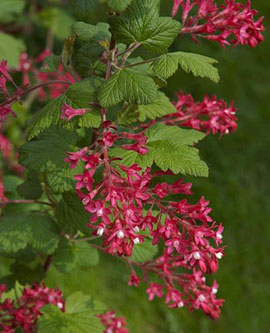
Ribes sanguineum var. sanguineum
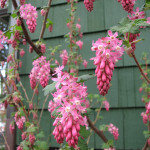
Red flowering currant (Ribes sanguineum) is an upright, multi-stemmed deciduous shrub that can get 6-10 feet tall, and is considered one of our prettiest native shrubs. Its bright pink, dangling flower clusters in late February and March are welcome signs of spring!
The bark is dark brownish-grey with pale brown lenticels. The palmate leaves have five lobes, and young leaves and flowers have a scent variously described as spicy or resinous. The fruits form as clusters of dark purple berries which contrast beautifully with the rosy gold fall foliage.
Keep a pair of binoculars handy if you plant this lovely shrub, because red flowering currant is a favorite of hummingbirds and other wildlife all year long. The flowers are important early spring nectar sources for rufous and Anna’s hummingbirds, spring azure and mourning cloak butterflies, and many native bees. Many birds eat the berries in the fall and winter, including towhees, thrushes, cedar waxwings, and sparrows. This charming plant also hosts the eggs of zephyr butterflies, and provides shelter for songbirds.
Red flowering currant can tolerate shade, but grows best (and blooms the most) in sunny locations with well drained soils.
- Light Requirements: Full Sun, Part Shade
- Water Requirements: Dry, Moist
- Ease of Growing: Easy to grow
- Growth Rate: Fast
- Spreads:
- Wildlife Support: Pollinators, Hummingbirds, Pest-eating Insects, Birds or Mammals
- Fire-resistant: Yes
- Edible: Yes
- Mature Height: 4-10ft
- Mature Width:3-10ft
Sword Fern
Polystichum munitum
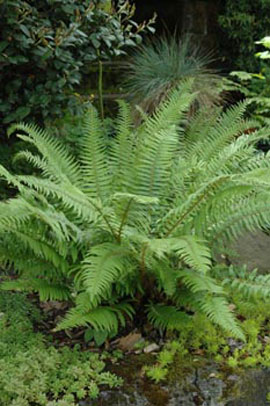
Polystichum munitum (Western Sword Fern) is an evergreen fern native to western North America, where it is one of the most abundant ferns occurring along the Pacific coast from southeast Alaska south to southern California, and also inland east to southeastern British Columbia, northern Idaho and western Montana, with isolated populations in interior northern British Columbia, the Black Hills in South Dakota, and on Guadalupe Island off Baja California.
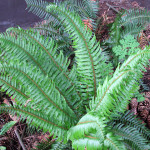
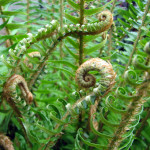
The dark green fronds of this fern grow several feet long at maturity, in a tight clump spreading out radially from a round base. They provide year-round wildlife shelter and visual interest, especially when paired with woodland companions such as Oregon oxalis, inside-out flower, wild ginger, deer fern, etc.
Their preferred habitat is the understory of moist coniferous forests at low elevations. They grow best in a well-drained acidic soil of rich humus and small stones, but can tolerate some clay. Sword ferns are very tough, and can survive occasional dry periods once established. They prefer shade but can tolerate some sun. Their thick root systems and broad spreading fronds make them excellent plants for erosion control.
In favorable conditions, sword ferns produces lush vegetation, and a thick layer of past years’ fronds will accumulate beneath. This material provides winter shelter for wildlife and creates a natural mulch, but these plants tolerate mild pruning to remove dead standing stalks. They also tolerate an occasional full winter pruning to encourage fresh new growth.
- Light Requirements: Part Shade, Full Shade
- Water Requirements: Dry, Moist
- Ease of Growing: Easy to grow
- Growth Rate: Moderate
- Spreads: No
- Wildlife Support: Birds or Mammals
- Fire-resistant: Yes
- Edible:
- Mature Height: 2-5ft
- Mature Width:2-4ft