Viburnum ellipticum
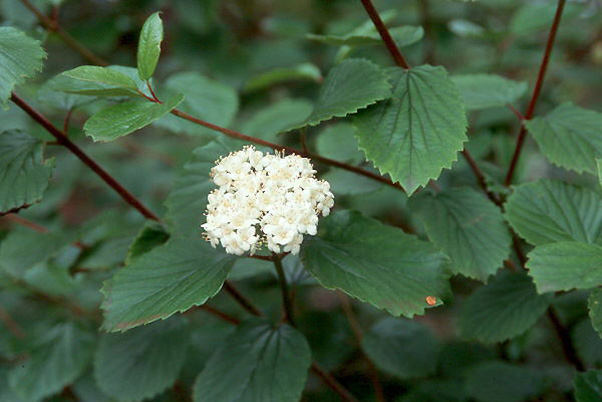
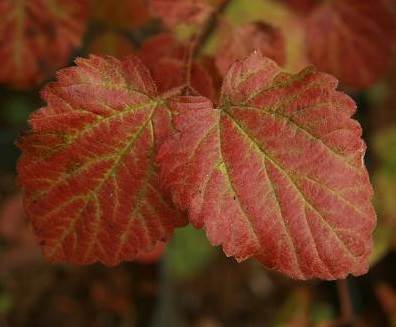
Oval-leaved viburnum (Viburnum ellipticum) is a deciduous shrub that brings three-season interest to any native garden. Clusters of small white flowers bloom in late spring and early summer. The berry-like fruit is red at first, becoming black when ripe. The simple oval leaves are 1-3″ long, coarsely toothed, and turn red in the autumn before dropping to reveal straight, upright central stems and widely spaced, horizontal branches.
This shrub supports pollinators and beneficial insects. Many birds and small mammals eat the berries, and birds nest and shelter in its branches.
Oval-leaved viburnum is native west of the Cascades in Oregon and Washington, where it is found mainly in dry open woods and lowland thickets. This shrub tolerates both seasonal flooding and drought, making it a hardy addition to the landscape. It does well as a border plant, such as at the edge of a wooded area. Pair it with snowberry, salal, and low Oregon grape for year-round beauty!
- Light Requirements: Full Sun, Part Shade, Full Shade
- Water Requirements: Dry, Moist
- Ease of Growing: Easy to grow
- Growth Rate: Moderate
- Spreads: No
- Wildlife Support: Pollinators, Pest-eating Insects, Birds or Mammals
- Fire-resistant: No
- Edible: No
- Mature Height: 5-15ft
- Mature Width:6-10ft
Golden Currant
Ribes aureum
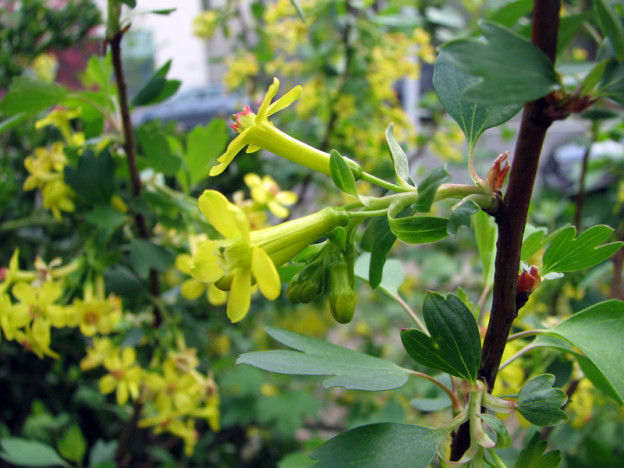
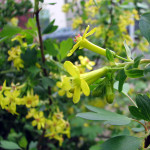
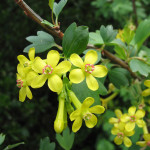
Golden currant (Ribes aureum) is a small to medium-sized deciduous shrub named for its golden flowers and golden red fall foliage. While not native to the Willamette Valley, this highly drought-tolerant Pacific Northwest native is common in Oregon and Washington east of the Cascades and into the Great Basin, and is an excellent choice for urban environments in a changing climate.
Golden currant grows in full sun and partial shade, in dry to moist conditions, and is drought tolerant. The leaves are deciduous, lobed, and vaguely maple-like, ½ – 1½ inches. Charming clusters of yellow flowers bloom from mid- to late-spring. Golden currant grows to approximately 6 feet tall by 6 feet wide.
It attracts hummingbirds and butterflies such as the spring azure and mourning cloak, and the fruit is eaten by birds and other wildlife. Combine this in a sunny spot with its cousin, red-flowering currant, and drought-tolerant groundcovers like alliums and camas, for a beautiful native display!
- Light Requirements: Full Sun, Part Shade
- Water Requirements: Dry, Moist
- Ease of Growing:
- Growth Rate: Moderate
- Spreads: No
- Wildlife Support: Hummingbirds, Birds or Mammals
- Fire-resistant: No
- Edible: Yes
- Mature Height: 6ft
- Mature Width:6ft
Goat’s Beard
Aruncus dioicus
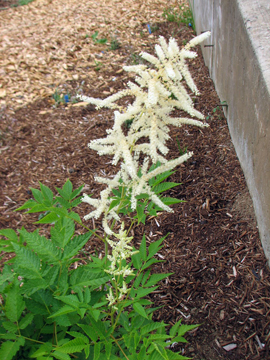
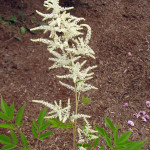
Goat’s Beard has decorative finely-cut foliage and will create a bold, showy effect for a moist or partly-shaded spot all season. Dense, feathery plumes of tight white flowers rise well above the foliage spring to summer.
Goat’s Beard is an excellent background plant or grouped in a woodland setting. It dies back to the ground in winter, only to return gloriously in the spring. Goat’s Beard spreads slowly by rhizomes to form attractive patches, and can be planted in more sunny areas provided there is good moisture. It’s a “host” plant to the Dusky Azure Butterfly.

- Light Requirements: Part Shade, Full Shade
- Water Requirements: Moist, Perennially Wet
- Ease of Growing: Easy to grow
- Growth Rate: Fast
- Spreads: Yes
- Wildlife Support: Pest-eating Insects, Birds or Mammals, Pollinators
- Fire-resistant: No
- Edible: No
- Mature Height: 5-15ft
- Mature Width:3-5ft
Oceanspray

Holodiscus discolor
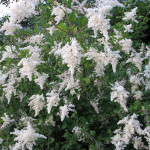
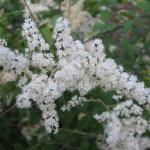
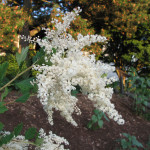
Oceanspray is native to western North America, most commonly found in the mountains of the Pacific Northwest. This fast-growing deciduous shrub gets 8-10′ tall and 3-7′ wide. Its small toothed leaves are 2-4 inches long. Cascading clusters of white flowers drooping from the branches give the plant two of its common names, oceanspray and creambush. The flowers have a faint sugary scent, and each one bears a small, hairy fruit containing one seed which is light enough to be dispersed by wind.
Oceanspray is found in a variety of habitats, from wet coastal forests to drier, cooler mountain peaks further inland. It often grows in areas dominated by Douglas-fir. The plant is found in areas prone to wildfire, such as chaparral communities. It is often the first green shoot to spring up in an area recovering from a burn or logging.
Many small solitary bees, bumblebees, and native butterflies visit this plant for nectar. It can also be considered a pollinator “nursery”, as pale swallowtail, spring azure, Lorquin’s admiral, and brown elfin butterflies all lay their eggs on it.
These attractive shrubs thrive on dry slopes in sun to part-sun, and spread well in favorable conditions. Long-leaf Oregon grape and salal do well in their shade, and they pair well with hazelnut to make a woodland border. Combine with red-flowering currant or vine maple for a deciduous screen.
- Light Requirements: Full Sun, Part Shade, Full Shade
- Water Requirements: Dry, Moist
- Ease of Growing: Easy to grow
- Growth Rate: Fast
- Spreads: Yes
- Wildlife Support: Pollinators, Pest-eating Insects, Birds or Mammals
- Fire-resistant: Yes
- Edible: No
- Mature Height: 8-10ft
- Mature Width:3-7ft
Douglas Fir
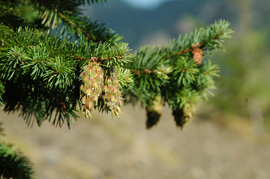
Pseudotsuga menziesii
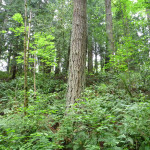
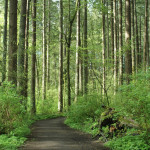
Douglas fir is one of the most common evergreen trees in the our region. It grows fast and can tolerate many soil types. This is a good tree to plant in groups as a windbreak, or at the edge of wooded areas, as it needs plenty of space.
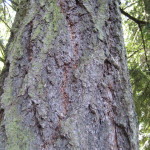
The bark is thin, smooth, and gray on young trees, and thick and corky on older trees. The needle-like leaves are spirally arranged and 2-3.5 cm long, and a bud at the tip of most branches distinguishes it from other evergreens. Douglas fir foliage has a noticeable sweet fruity-resinous scent, particularly if crushed. The 2-4 inch long cones are green in spring, maturing to orange-brown in the autumn 6-7 months later. The male cones disperse yellow pollen in spring.
Many kinds of wildlife depend on Douglas fir for winter forage. Mice, voles, shrews, chipmunks, pine siskins, song sparrows, golden-crowned sparrows, white-crowned sparrows, red crossbills, dark-eyed juncos, and purple finches all eat the abundant seeds. Black-tailed deer and elk will eat the seeds late in winter when other forage is scarce. The Douglas squirrel harvests and caches great quantities of Douglas fir cones for later use, and the squirrels will also eat mature pollen cones, the inner bark, terminal shoots, and tender young needles.
Fun facts: Douglas fir (Pseudotsuga menziesii) is neither a true fir, nor is it a hemlock (hence the Latin name, *Pseudo*tsuga). It is its own genus altogether. It is also the second-tallest evergreen in the world after the Coast Redwood. Trees 200-250 feet or more in height and 5-6 feet in diameter are common in old growth stands, and heights of 300-400 feet were reported by early lumbermen. It commonly lives more than 500 years and occasionally more than 1,000 years.
- Light Requirements: Full Sun, Part Shade
- Water Requirements: Dry, Moist, Seasonally Wet
- Ease of Growing: Easy to grow
- Growth Rate: Fast
- Spreads: No
- Wildlife Support: Birds or Mammals
- Fire-resistant: Yes
- Edible: No
- Mature Height: 120-240ft
- Mature Width:30ft
Red Flowering Currant
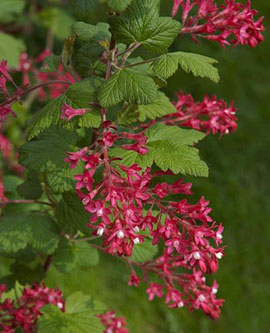
Ribes sanguineum var. sanguineum
Red flowering currant (Ribes sanguineum) is an upright, multi-stemmed deciduous shrub that can get 6-10 feet tall, and is considered one of our prettiest native shrubs. Its bright pink, dangling flower clusters in late February and March are welcome signs of spring!
The bark is dark brownish-grey with pale brown lenticels. The palmate leaves have five lobes, and young leaves and flowers have a scent variously described as spicy or resinous. The fruits form as clusters of dark purple berries which contrast beautifully with the rosy gold fall foliage.
Keep a pair of binoculars handy if you plant this lovely shrub, because red flowering currant is a favorite of hummingbirds and other wildlife all year long. The flowers are important early spring nectar sources for rufous and Anna’s hummingbirds, spring azure and mourning cloak butterflies, and many native bees. Many birds eat the berries in the fall and winter, including towhees, thrushes, cedar waxwings, and sparrows. This charming plant also hosts the eggs of zephyr butterflies, and provides shelter for songbirds.
Red flowering currant can tolerate shade, but grows best (and blooms the most) in sunny locations with well drained soils.
- Light Requirements: Full Sun, Part Shade
- Water Requirements: Dry, Moist
- Ease of Growing: Easy to grow
- Growth Rate: Fast
- Spreads:
- Wildlife Support: Pollinators, Hummingbirds, Pest-eating Insects, Birds or Mammals
- Fire-resistant: Yes
- Edible: Yes
- Mature Height: 4-10ft
- Mature Width:3-10ft
Sword Fern
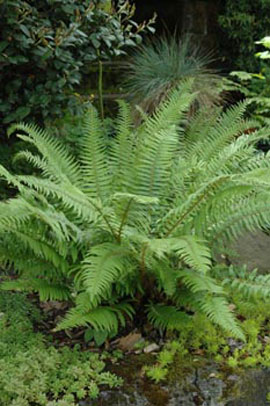
Polystichum munitum
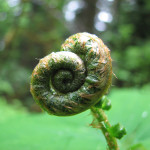
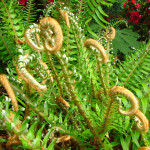
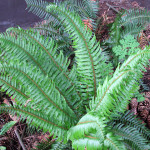
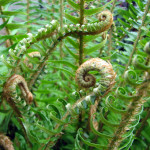
Polystichum munitum (Western Sword Fern) is an evergreen fern native to western North America, where it is one of the most abundant ferns occurring along the Pacific coast from southeast Alaska south to southern California, and also inland east to southeastern British Columbia, northern Idaho and western Montana, with isolated populations in interior northern British Columbia, the Black Hills in South Dakota, and on Guadalupe Island off Baja California.
The dark green fronds of this fern grow several feet long at maturity, in a tight clump spreading out radially from a round base. They provide year-round wildlife shelter and visual interest, especially when paired with woodland companions such as Oregon oxalis, inside-out flower, wild ginger, deer fern, etc.
Their preferred habitat is the understory of moist coniferous forests at low elevations. They grow best in a well-drained acidic soil of rich humus and small stones, but can tolerate some clay. Sword ferns are very tough, and can survive occasional dry periods once established. They prefer shade but can tolerate some sun. Their thick root systems and broad spreading fronds make them excellent plants for erosion control.
In favorable conditions, sword ferns produces lush vegetation, and a thick layer of past years’ fronds will accumulate beneath. This material provides winter shelter for wildlife and creates a natural mulch, but these plants tolerate mild pruning to remove dead standing stalks. They also tolerate an occasional full winter pruning to encourage fresh new growth.
- Light Requirements: Part Shade, Full Shade
- Water Requirements: Dry, Moist
- Ease of Growing: Easy to grow
- Growth Rate: Moderate
- Spreads: No
- Wildlife Support: Birds or Mammals
- Fire-resistant: Yes
- Edible:
- Mature Height: 2-5ft
- Mature Width:2-4ft
Grand Fir
Abies grandis
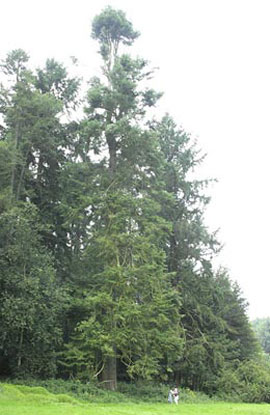
Grand fir (Abies grandis) is a shade tolerant, slow-growing evergreen tree with short, dense branches. It can get quite tall in the wild, reaching 250 feet in height and with a trunk diameter of up to 6 feet.
The glossy dark green leaves are needle-like, 3-6 cm long, and extend flat out from the branch on either side. The 6-12 cm cones do not fall to the ground whole, but disintegrate on the tree and release their seeds about 6 months after pollination.
Grand fir is an important wildlife tree. The California tortoiseshell butterfly feeds on the sap and secretions from cones and needles. Grouse eat the needles, and nuthatches, chickadees, and squirrels eat the seeds. Grand firs also provide excellent cover and nesting habitat for birds and small mammals.
The foliage has an attractive tangerine-like scent, and Grand Firs are sometimes used for Christmas decoration, including as Christmas trees. It is also planted as an ornamental tree in large parks.
Grand fir needs well-drained soils and plenty of room to grow, and is an elegant addition to any landscape.
- Light Requirements: Full Sun, Part Shade, Full Shade
- Water Requirements: Moist, Seasonally Wet
- Ease of Growing: Easy to grow
- Growth Rate: Moderate
- Spreads: No
- Wildlife Support: Hummingbirds, Pest-eating Insects, Birds or Mammals
- Fire-resistant: No
- Edible: No
- Mature Height: 200ft
- Mature Width:40ft